
27.08.2026
With her first driving lesson at the Paravan Driving School in Heidelberg, a new chapter begins for 17-year-old Nahla. After suffering a severe brain hemorrhage on New Year’s Eve 2022 and undergoing a long rehabilitation, she now has one goal in mind: her driver’s license.
“I’m really excited—I’m so happy. Just being able to drive someday. That’s something really amazing to me. That sense of freedom—I just love it.”
The first step: Does the car suit Nahla—or does Nahla suit the car?
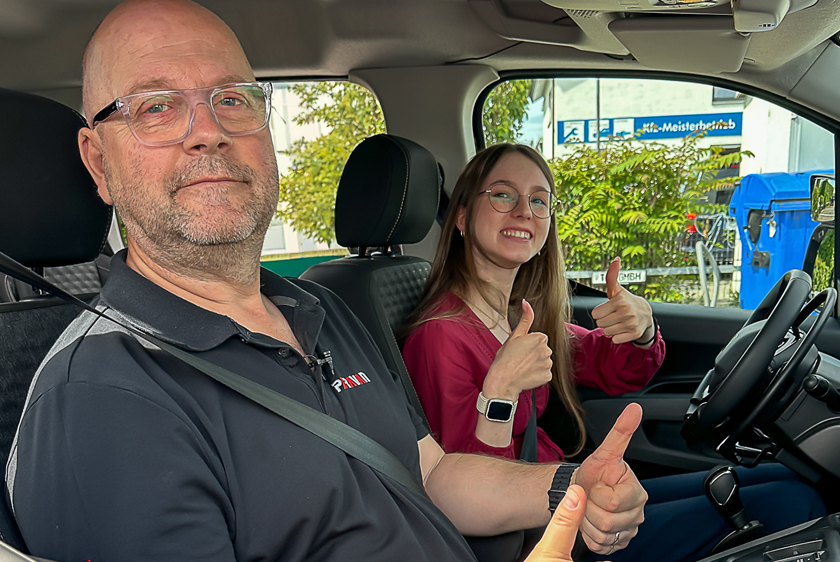
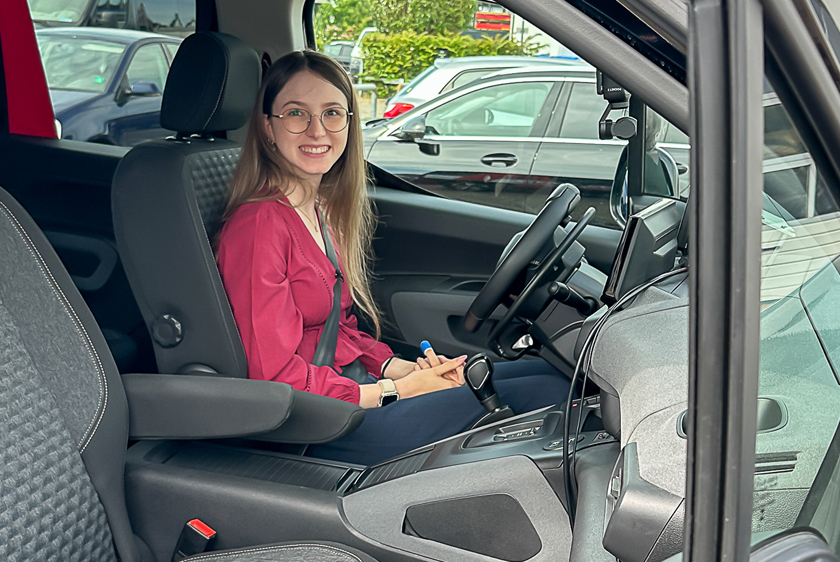
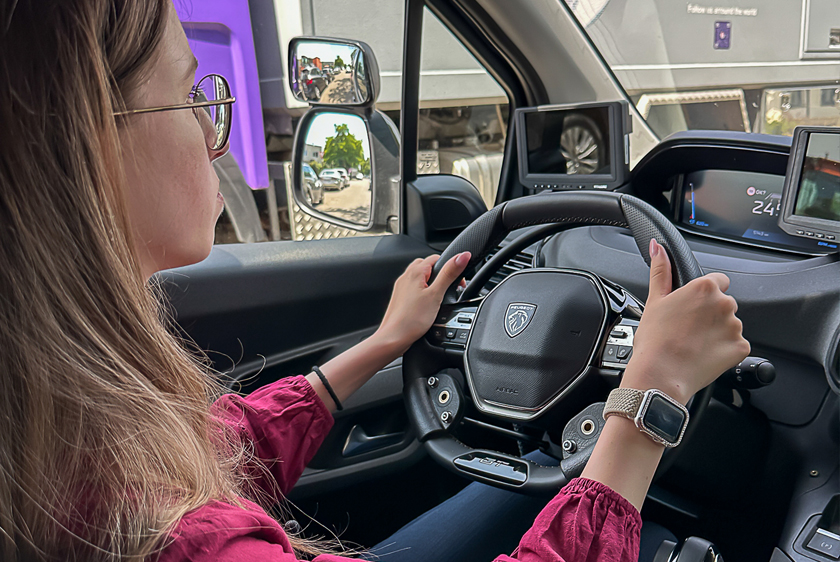
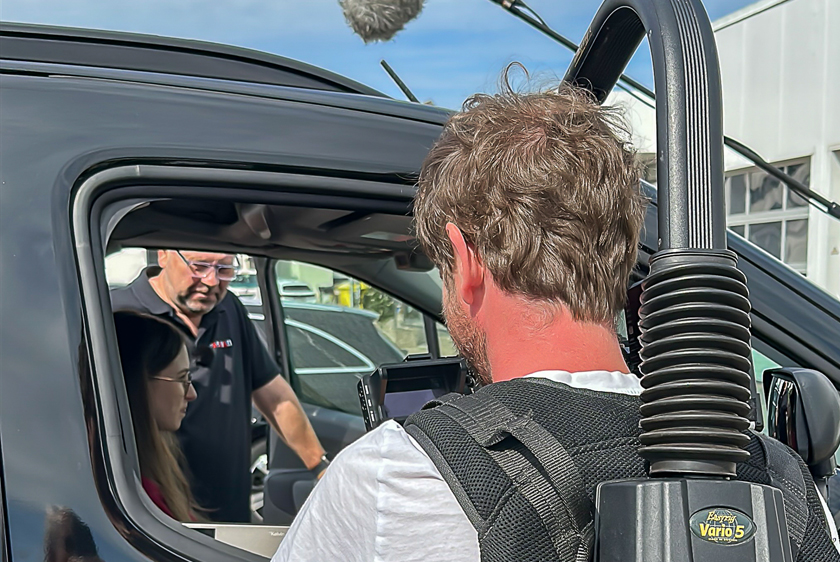
She had already come to Heidelberg for her first driving lesson in early June. At first, the focus wasn’t on the driving itself. Together with driving instructor Carsten Seidler, they checked how Nahla gets into the vehicle, whether she can safely operate the automatic transmission and securely grip the steering wheel at all times, or whether technical adjustments are necessary. The first driving lesson serves to assess the individual requirements for practical driving instruction. At the same time, they check whether the vehicle still needs to be adapted or whether all requirements for starting practical driving instruction have already been met.
Nahla’s story is representative of many people who, following an accident, an illness, or due to a physical limitation, wish to drive a car themselves. Often, it becomes clear right at the start of driver training that, with the right instruction and the proper technology, more is possible than initially assumed.
“During the first driving lesson, we’ll start by figuring out what Nahla needs,” says Carsten Seidler, director of the Paravan Driving School’s Heidelberg branch. “We’ll start with steering, and then move on to the brakes and accelerator.” For driving instructor Carsten Seidler, the focus is therefore not on the technology, but on Nahla. Together, they first determine which physical abilities she possesses and what individual vehicle modifications may still be necessary. The driving instruction builds on this foundation.
The real challenge, therefore, lay less in the vehicle itself and more in gaining confidence in her own abilities. Accordingly, the first drive focused on developing a feel for the vehicle. Slowly but with intense concentration, Nahla completed her first few kilometers alongside Carsten Seidler—and even mastered reverse parking on her first try. By the end of the first driving lesson, it was clear: Nahla can operate the automatic vehicle safely. Even gripping the steering wheel securely posed no major problem. This laid the foundation for beginning regular driver training in September. The only thing that will be needed later is a wheelchair loading aid in the trunk, as she will continue to rely on her wheelchair for longer trips.
More Than Just a Driving School: The Path to Personal Mobility
With locations in Heidelberg and at the Aichelau Mobility Park, Paravan operates a driving school specializing in people with physical disabilities. Together with mobility consultants, traffic medicine specialists, technical experts, and specialists in individual vehicle adaptations, the team guides students every step of the way—from the initial test drive through medical and technical evaluations to driver training and the individually adapted vehicle. This close collaboration across all departments makes it possible to develop the right mobility solution for every individual.
For Nahla and her parents, it quickly became clear that they didn’t want to go through this process at a regular driving school. They were looking for a team with experience in a wide range of disabilities—one that takes the time to work with students to determine which individual solution would pave the way to a driver’s license.
Now, this path has become a good deal more within Nahla’s reach. “She’s no longer dependent on us. She’ll be able to just get in the car and drive wherever she wants,” says her mother, Nadine. “That’s freedom for her—just what others her age do.”
PressRELEASE
A Driving School That Inspires: The First Step Toward Independent Mobility
Press information for download

Press & PR
Anke Leuschke
Fon: +49 (0)7388 9995 81
Fax: +49 (0)7388 9995 999
