
05.08.2026
Return to Work After an Accident or Illness:
Customized workplace and vehicle adaptations make a return to work possible. However, it is not just the technology that matters—early consultation, close collaboration among all parties involved, and tailor-made solutions for each individual workplace are also crucial.
Experienced skilled workers are desperately sought after. At the same time, every year people leave their previous jobs following a workplace accident or a serious illness—often not because they can no longer perform their duties, but because access to machinery, vehicles, or workstations suddenly becomes an insurmountable hurdle. This is precisely where the work of Paravan’s mobility experts comes in. Working together with those affected, employers, workers’ compensation associations, pension insurance providers, and the Employment Agency, they create customized solutions that pave the way back to the workplace. After all, vocational reintegration begins long before the first modification—with consultation, analysis, and collaboration among all parties involved.
Reintegration Starts with Listening
Before we even discuss lift systems, control elements, or the Space Drive electronic driving and steering system, another question takes center stage: What must the person be able to do at their workplace? “Technology is never the starting point,” says Daniel Weber, mobility consultant at Paravan. “We first look at the person and their workplace. What movements are possible? What demands does the machine place on the user? Which work processes must be maintained? Only once we can answer these questions does the search for the right solution begin.”
That’s why the consultation doesn’t end with the vehicle. It’s crucial to understand the workplace requirements precisely. Through close coordination with the individual concerned, employers, funding agencies, and technical experts, a comprehensive picture of the situation emerges. Only then can a solution be developed that supports daily work life in the long term.
There is no standard solution, because there is no such thing as a standard person
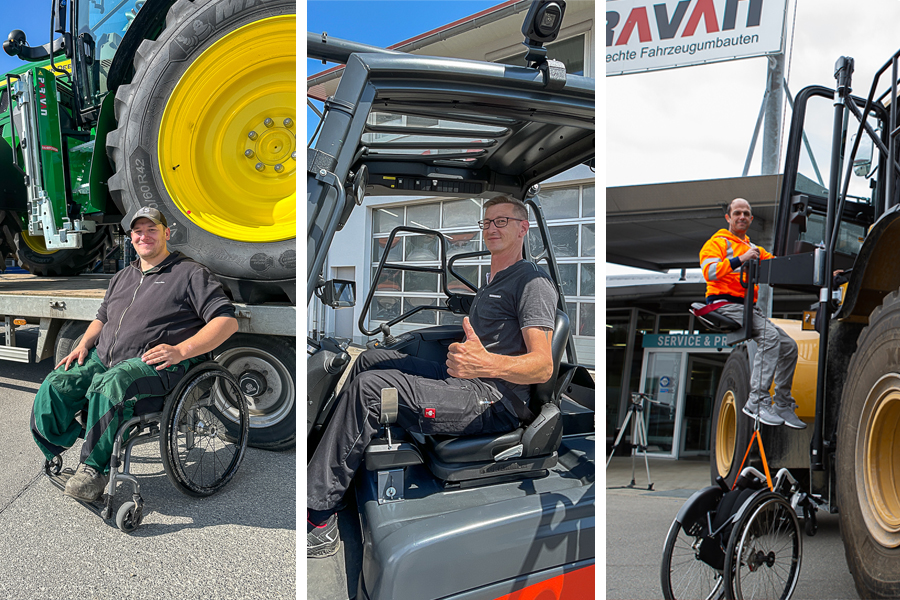
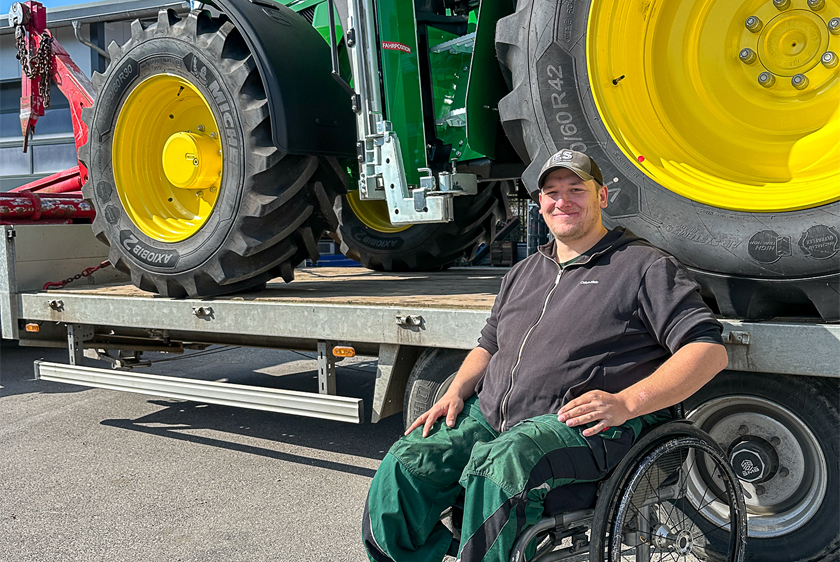
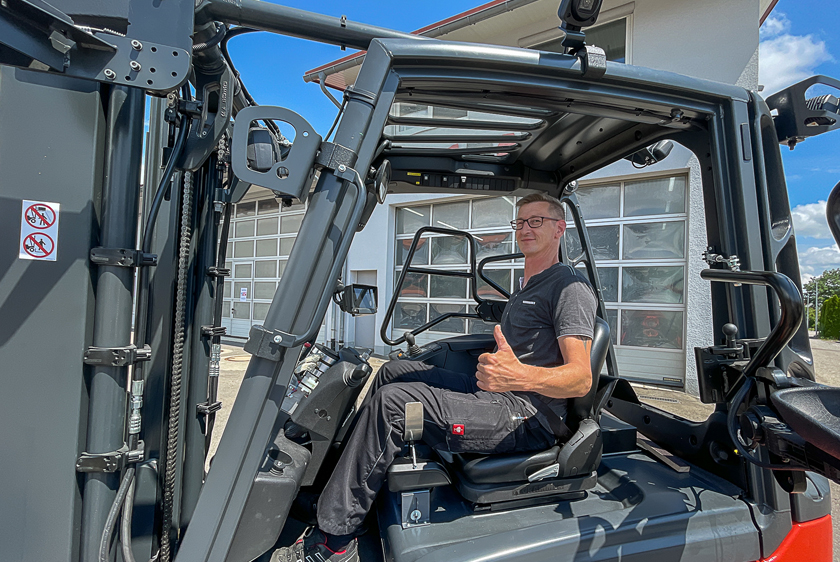
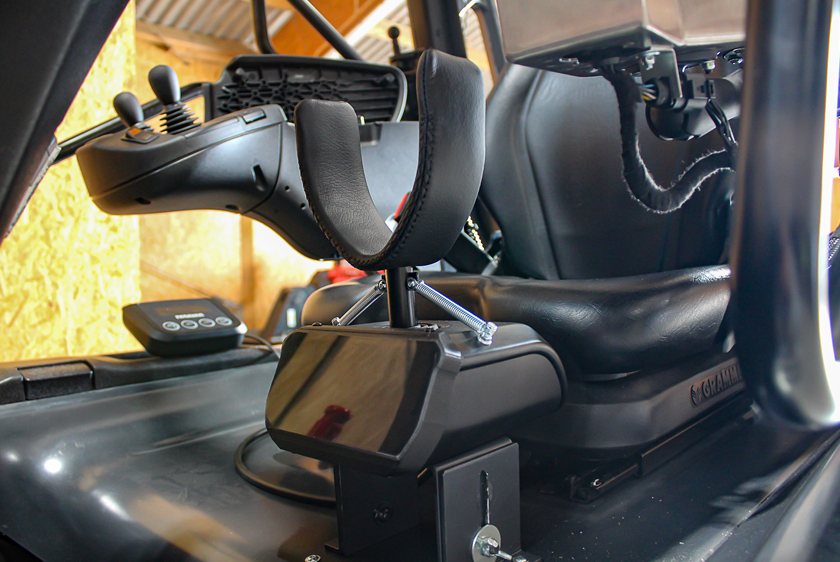
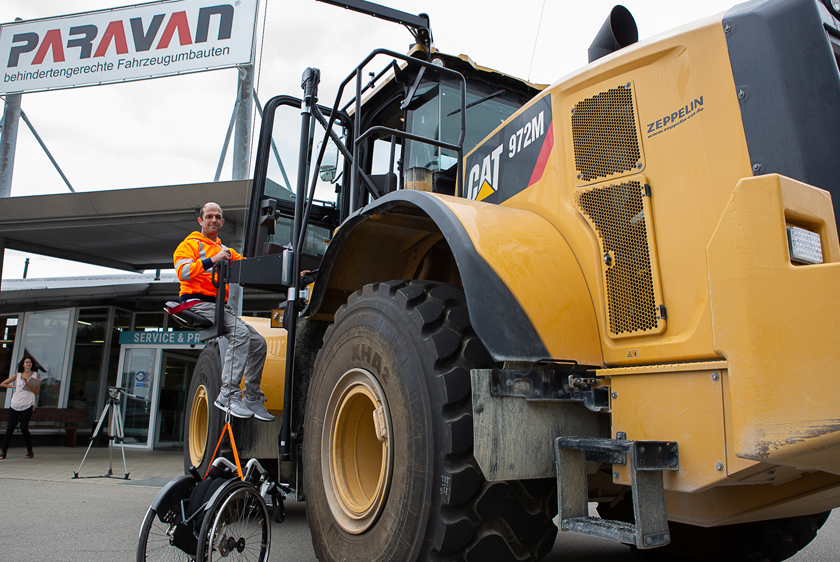
The range of projects extends from relatively minor adaptations to complex custom designs. Sometimes, a boarding aid is all that’s needed for an employee to safely operate a tractor or forklift again. In other cases, hydraulic lift systems, customized control concepts, or solutions featuring the Space Drive electronic drive and steering system are developed. Often, the success of reintegration isn’t determined by the scale of the modification. Sometimes a relatively minor technical adjustment is all it takes to restore access to a machine. In other cases, a completely new solution is developed. Ultimately, it’s not the scope of the modification that matters, but rather that the solution is precisely tailored to the individual and their workplace.
A Task Becomes a Development Project
“For us, every project begins with a new challenge. Often, there isn’t yet a ready-made solution for a machine or a workplace,” says Manuel Buk, deputy operations manager at Paravan. “Then, together with the design, manufacturing, and mobility consulting teams, we develop the appropriate technical solution for the specific workplace.”
Whether it’s a tractor, forklift, wheel loader, or sweeper—every project presents different technical requirements. Based on the workplace’s requirements, a customized solution is created, developed in collaboration with the future user from the initial sketch through testing. Often, several development steps are necessary until ergonomics, safety, and usability prove effective in everyday work. Only then is a project considered complete.
Many Partners—One Common Goal
Successful return to work depends on the collaboration of all parties involved. Employers want to retain experienced employees within their companies. Occupational safety associations, pension insurance agencies, and the Employment Agency assist with the return to work and support the necessary measures. Within this network, Paravan assumes the role of technical solution partner—from analysis through development to implementation. The goal is not to modify a machine, but to find a solution that permanently brings the person back to their workplace.
Workplace Participation Secures Experience and the Future
This issue continues to gain importance. In light of the shortage of skilled workers, retaining experienced employees is becoming a decisive factor for many companies. Individual workplace and vehicle adaptations therefore do far more than simply contribute to workplace inclusion. They help companies preserve valuable expertise and enable people to return to their jobs after an accident or illness.
Behind every adapted tractor, every converted forklift, or every modified construction machine lies far more than just a technical project. It’s about experience that companies don’t want to lose. It’s about people who want to continue doing their jobs. And it’s about the conviction that mobility begins where others believe the road ends.
More information
Press release
Return to Work After an Accident or Illness
Press information for download

Press & PR
Anke Leuschke
Fon: +49 (0)7388 9995 81
Fax: +49 (0)7388 9995 999
