
26.11.2026
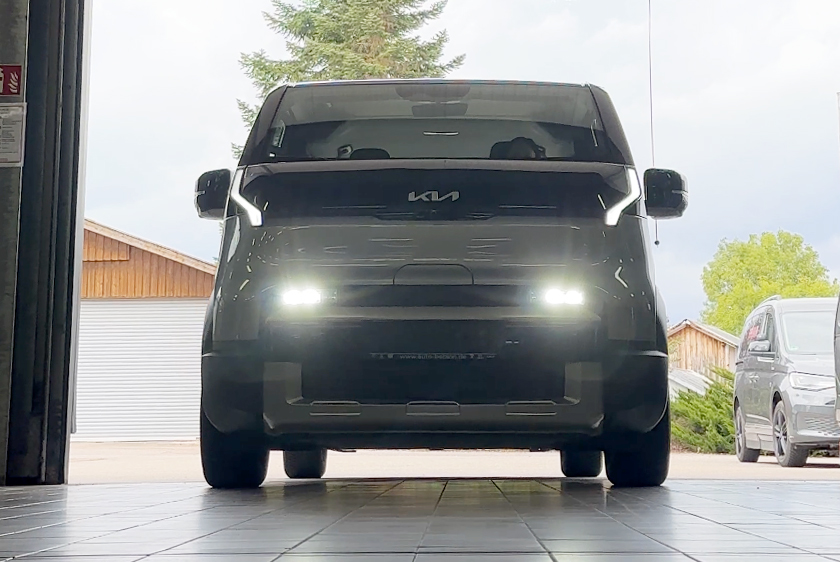
With Space Drive integrated, generous interior height and a wide range of conversion options, Paravan is adapting the all-electric Kia PV5 for drivers and passengers with physical disabilities. Development now focuses on a power-operated underfloor ramp.
With the Kia PV5, Paravan is developing a new all-electric mobility solution for people who want to drive directly from their wheelchair. The vehicle enters a segment in which customized wheelchair-accessible conversions have so far been based primarily on vehicles with combustion engines. Until now, electric vehicle conversions have largely focused on passenger cars for drivers who can transfer from their wheelchair to the driver's seat. The Kia PV5 now opens up new possibilities for comprehensive vehicle conversions for drivers who remain in their wheelchairs, as well as customized solutions for wheelchair passengers.
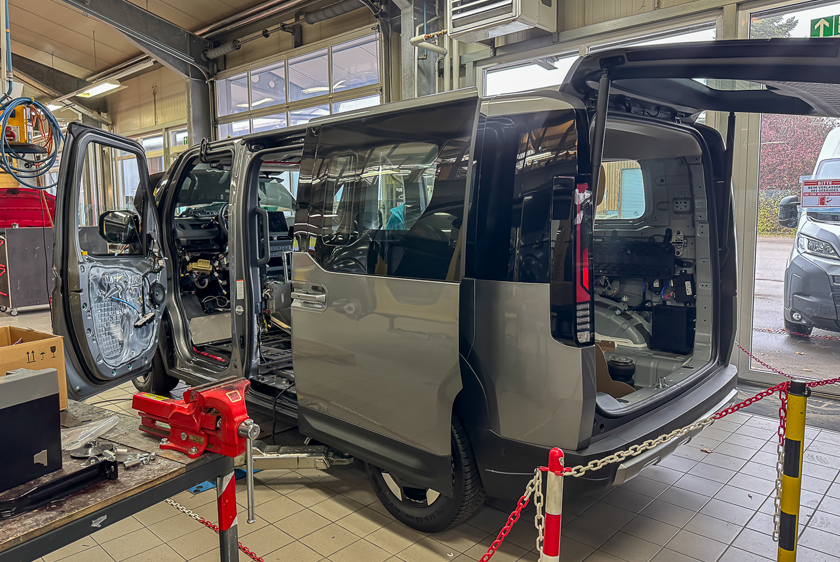
After removing the interior trim and seats, it became clear that the vehicle platform offers more potential than initially expected. The generous interior height and passage width create ideal conditions for custom conversions without requiring extensive floor lowering or additional roof structures. A reinforced vehicle floor will provide the foundation for the different conversion options. Its design is complete, and installation will take place after the entry system has been integrated.
Space Drive Integrated and Tested
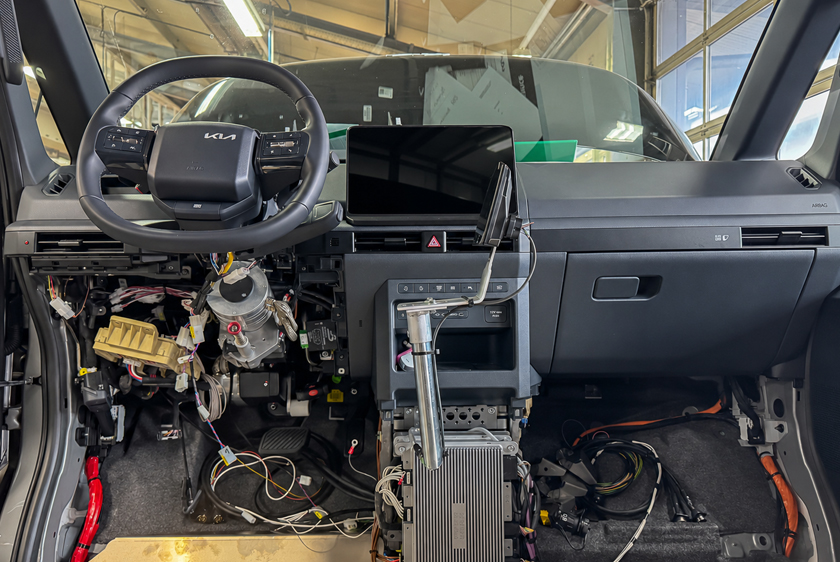
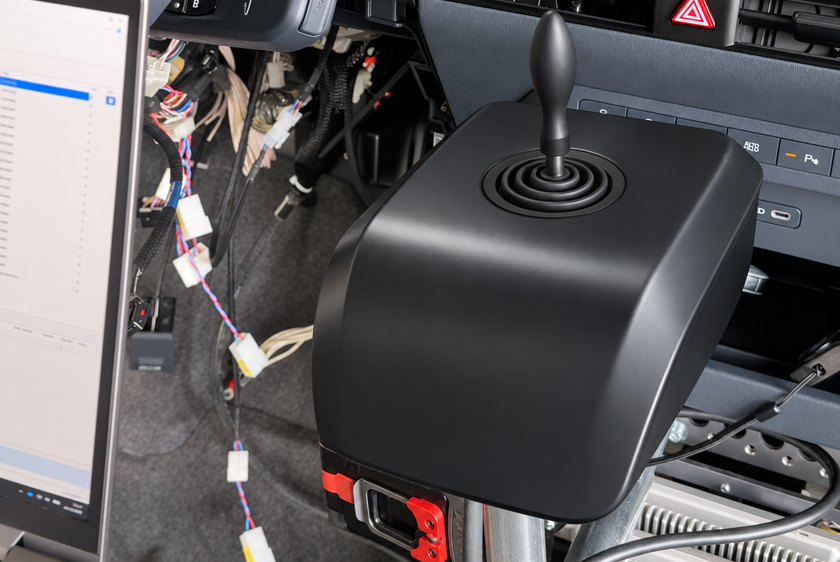
A key development milestone has already been reached: the Space Drive digital driving and steering system has been integrated into the Kia PV5. The primary functions—accelerator, brake, and steering—have been connected and tested. Depending on individual requirements, different input devices such as a joystick, mini steering wheel, or accelerator-brake slider can be used.
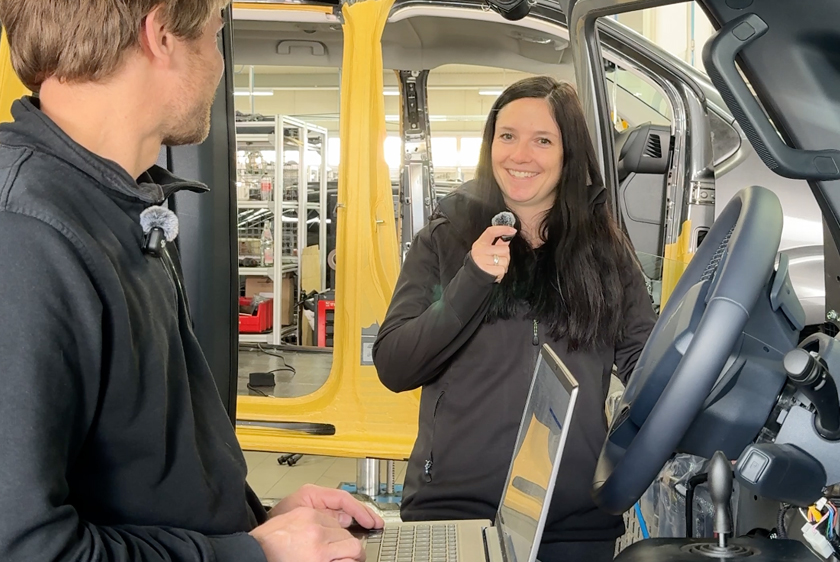
Connecting the so-called secondary functions posed a particular challenge. In modern vehicles, automakers are increasingly securing their electronics against external interference. This complicates the integration of additional control systems, such as those required for custom vehicle conversions. The development team has overcome this hurdle as well. “We were able to connect all key functions, including vehicle start-up, gear selection, turn signals and power windows, so that they can be controlled through our system,” explains Swen Lang, a software developer at Paravan who uses a wheelchair himself. This means that the Kia PV5’s secondary functions can also be operated via the touchscreen system, voice control, or the NX NextHMI app. The integration has been implemented and successfully tested.
This technical integration provides the foundation for different driver configurations. For example, the Paravan PR 50 is intended to enable users to drive directly from their wheelchair. Its combination with the Paravan docking station and the reinforced floor panel has already been conceptually defined for the Kia PV5. The integration of other electric wheelchairs with suitable safety systems and individually customized backrests is also planned. For people who transfer from a wheelchair to the original driver’s seat, the Paravan transfer console is provided as an alternative.
The next challenge: getting into the vehicle
While the electronic integration is already well advanced, development is now focused on independent wheelchair access. The plan is to install an electrically powered underfloor ramp at the side sliding door. Initial mechanical tests are underway, with electrification and automation set to follow in the next development phase. “We’re currently still working on the implementation, but the plan is clear: an electrically powered underfloor ramp,” says Alexander Kohler, a design engineer at Paravan.
Paravan has been using side ramp solutions since its very first vehicle conversions. The company relied on a side ramp solution as early as the Chrysler Voyager—its first wheelchair-accessible vehicle conversion—and later with the Kia Carnival. With newer vehicle platforms, cassette lifts have increasingly been used. With the Kia PV5, Paravan aims to bring back the underfloor ramp, an access solution that remains highly valued and sought after by many customers. The key requirement is that wheelchair users must be able to enter and exit the vehicle independently, without assistance. The ramp is designed to be operated from outside the vehicle via remote control or app, and from inside the vehicle via Touch-System.
Outlook: From Development Platform to Customized Mobility Solution
The Paravan Kia PV5 is set to provide another all-electric base vehicle for customized mobility solutions – ranging from a driver’s position with conventional driving aids to a fully adapted vehicle with Space Drive for people who drive directly from their wheelchairs. The next crucial development step involves integrating the underfloor ramp into the vehicle and automating its operation. This will be followed by the installation of the prepared vehicle floor and further interior outfitting.

Press release
The Paravan Kia PV5: An Electric Vehicle for Individual Mobility Takes Shape
Press information for dowload

Press & PR
Anke Leuschke
Fon: +49 (0)7388 9995 81
Fax: +49 (0)7388 9995 999
